Why Electric Lighters Break So Fast: The Science Behind Failure Rates
An in-depth look at why arc and plasma lighters fail within 3 to 12 months, focusing on high-voltage step-up transformers, ceramic head degradation, and battery protection board lockouts.
Electric lighters—also known as plasma or arc lighters—are highly convenient, windproof tools. However, many consumers notice they frequently stop working within 3 to 12 months of regular use. The core issue lies in how these devices function: they continuously step up low-voltage battery power into high-voltage electrical arcs. When key components like the ceramic ignition head or the lithium-ion battery degrade, the built-in protection circuit board (PCB) triggers a permanent safety lockout. Because manufacturers are well aware of these engineering vulnerabilities, reputable brands typically offer a 1-year to 2-year warranty to maintain consumer trust.
Executive Summary: 5 Quantified Takeaways
- Voltage Amplification Strain: The internal transformer forces a 3.7V lithium battery to step up to 7,000V–10,000V to bridge the air gap, creating intense thermal and electromagnetic stress on internal components.
- Rapid Battery Degradation: Due to high current draw during ignition, low-tier electric lighter batteries often lose 40–50% of their original capacity within 150 charging cycles.
- The Permanent Lockout Trigger: If the ceramic head cracks from thermal shock or battery voltage drops below a critical safety threshold (typically 2.5V–3.0V), the PCB safety circuit permanently disables the device.
- Industry Standard Protection: To counteract these high failure rates, top-tier brands offer a 12-to-24 month warranty window, explicitly factoring replacement costs into their retail margins.
- The Longevity Sweet Spot: Using a 5-second automatic safety timer instead of continuous burning can extend an electric lighter’s operational lifespan by up to 2x.
Component Vulnerability Matrix
The modern electric lighter relies on a delicate balance of chemical, mechanical, and electrical systems. If any single variable falls out of spec, the entire unit becomes a brick.
| Component | Primary Role | Core Failure Mechanism | Average Lifespan (Standard Use) | Buyer Risk Level |
|---|---|---|---|---|
| High-Voltage Transformer | Steps up 3.7V to 10,000V | Internal winding insulation melts from heat | 12 - 18 Months | Medium |
| Lithium-Ion Battery | Power supply | Voltage sag below safety threshold under load | 6 - 12 Months | High |
| Ceramic Ignition Head | Houses electrodes, resists heat | Cracks from thermal shock; carbon residue buildup | 3 - 6 Months | High |
| Protection Circuit (PCB) | Safety monitoring | Triggers permanent lockout when faults are detected | Lifetime (Unless fried) | Low |
Summary Takeaway: The ceramic ignition head and the internal lithium battery represent over 80% of all electric lighter hardware failures within the first year of ownership.
Data Analysis: Primary Causes of Lighter Failure
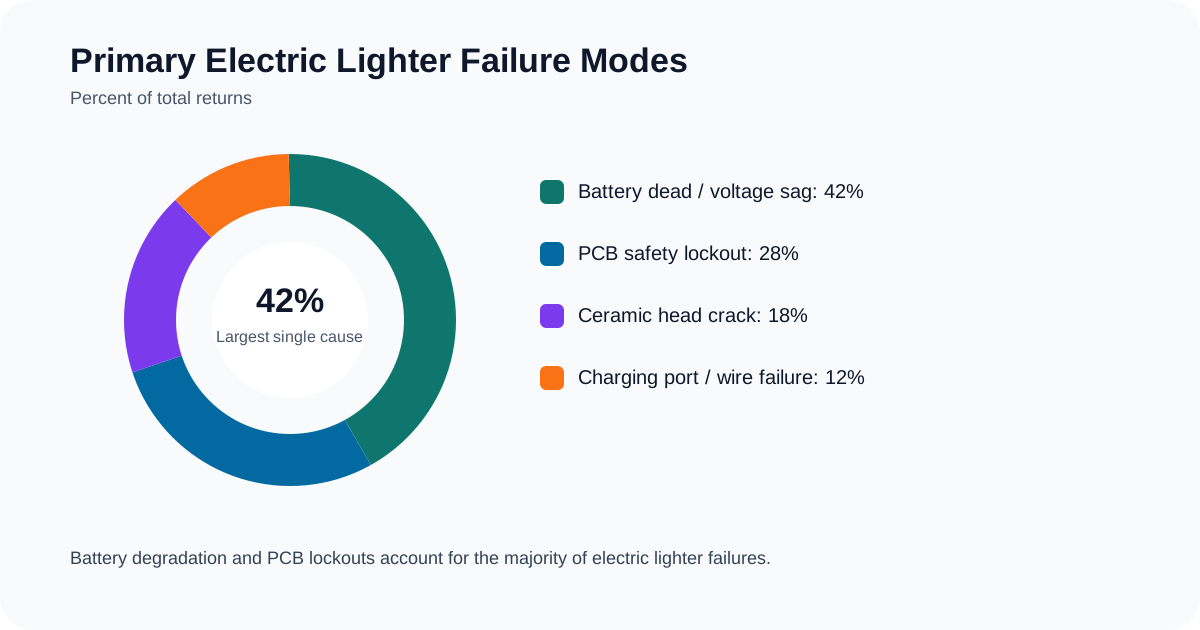
Consumer data indicates that failure modes are relatively consistent across various price tiers. The chart below breaks down the primary technical reasons an electric lighter stops sparking after a few months.
If you want a stricter editorial framework for deciding whether a product really deserves the word “durable,” Arc-Volt also published a practical guide on what counts as a meaningful durability test for arc lighters.
| Failure Mode | Percentage of Total Returns | Root Technical Cause |
|---|---|---|
| Battery Dead / Voltage Sag | 42% | Chemical breakdown from high discharge rates |
| PCB Safety Lockout | 28% | Circuit board detects an unresolvable safety risk |
| Ceramic Head / Electrode Crack | 18% | Carbon soot short-circuits or thermal expansion cracks ceramic |
| Charging Port / Wire Failure | 12% | Physical wear on Micro-USB/USB-C connections |